
The UAE is ushering in a new era of connectivity, with the nation’s ambitious rail network set to reshape both daily life and long-term investment opportunities. At the heart of this transformation is Etihad Rail, the country’s national rail system, which is now moving quickly toward large-scale passenger operations. This project isn’t just about trains; it’s about redefining mobility, economic integration, and how people live and invest across the Emirates.
A National Transportation Revolution
Etihad Rail began as a freight service and has since grown into a comprehensive rail programme aiming to link all seven emirates. While freight services have been operational, the passenger segment is the most eagerly awaited. Starting in 2026, passengers will be able to travel between key emirates by rail, with integrated connections to buses, taxis, and local networks like the Dubai Metro all aimed at seamless city-to-city travel.
The passenger network will stretch across the country, connecting 11 cities and regions from the western border near Saudi Arabia to the east in Fujairah. Trains are expected to carry up to 36 million riders annually by 2030, offering a modern, safe, and efficient rail experience with onboard amenities such as Wi-Fi, entertainment, and charging stations.
Abu Dhabi to Dubai Fast, Efficient, and Game Changing
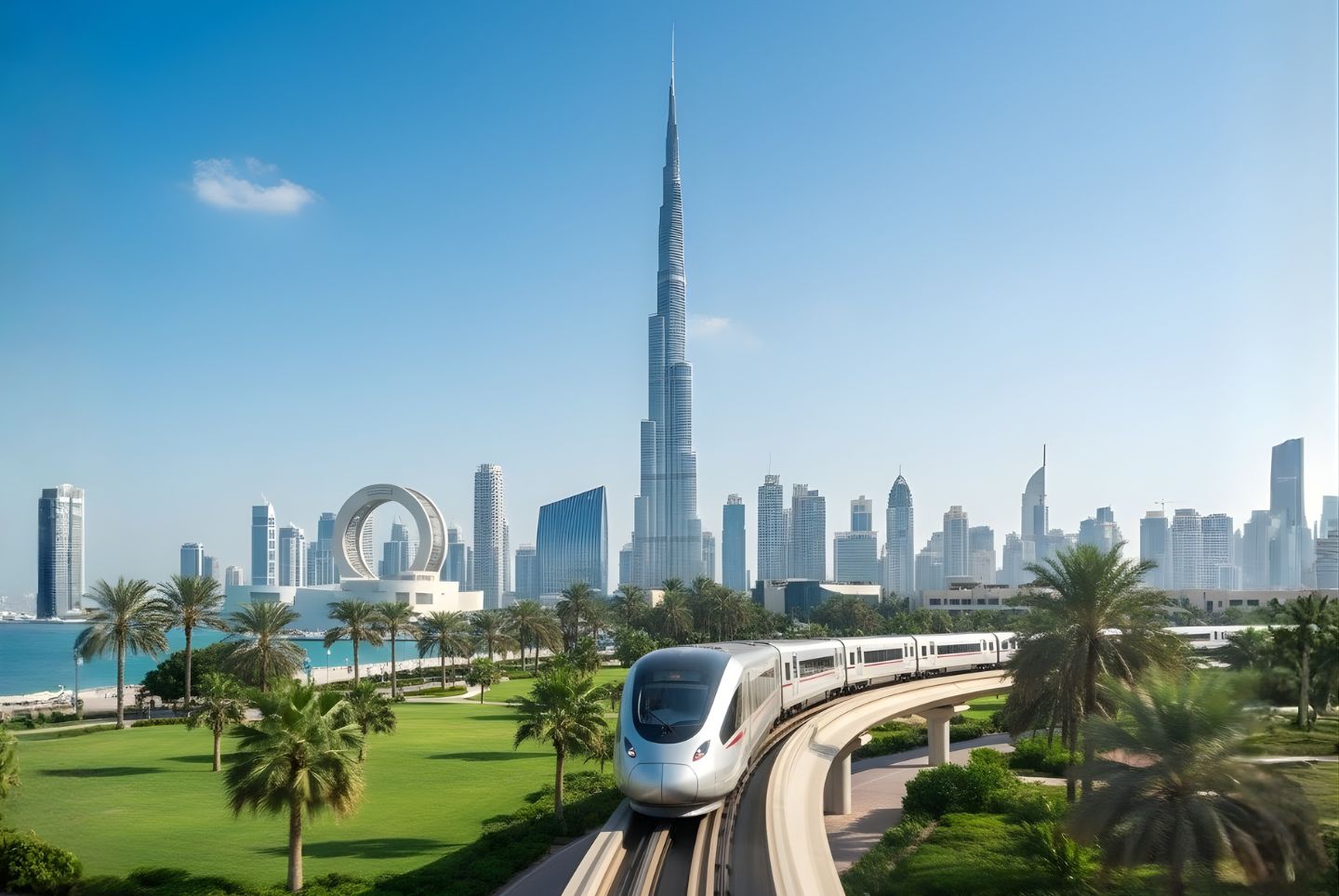
One of the most transformative elements of the Etihad Rail project is the planned high-speed rail line between Abu Dhabi and Dubai. Designed for speeds of up to 350 km/h, this segment could cut the travel time between the two emirates to around 30 minutes once fully completed.
While the standard passenger service between Abu Dhabi and Dubai expected to operate at speeds up to around 200 km/h, it will take approximately 57 minutes, the dedicated high-speed corridor represents the next big leap in UAE mobility.
This rapid connection will make commuting, leisure travel, and business trips between the two cities more practical than ever before, effectively broadening the real-estate market’s reach and blurring traditional geographic boundaries.
Stations as Catalysts for Growth
Strategically located rail stations will act as new hubs of development, especially in areas already poised for expansion. In Dubai, regions around proposed stations like Al Jaddaf and future hubs connected to the metro are expected to benefit significantly from enhanced accessibility. In Abu Dhabi, Reem Island, Yas Island, and Saadiyat Island stand out as prime growth areas.
Experts suggest that proximity to rail stations could lead to property value increases of 10%–15% over time as improved connectivity drives demand from both residents and investors. This echoes past infrastructure-led growth trends, such as those seen around the Dubai Metro when it launched.
Real Estate: What This Means for Investors
The impact of the Etihad Rail network on Dubai’s real estate landscape can’t be understated. Here’s how this major infrastructure project is reshaping investment strategies:
1. Enhanced Commuter Accessibility
Faster and more reliable rail travel makes it feasible for professionals to live farther from traditional urban centers without sacrificing convenience, broadening demand in suburban and emerging communities.
2. Property Value Appreciation
Areas near key stations, particularly transit-oriented developments, are expected to see increased demand and gradual price appreciation as connectivity becomes a key driver of choice.
3. Stronger Rental Markets
Improved transport links can make properties in well-connected zones more attractive to tenants, supporting higher occupancy and rental income potential.
4. Catalyst for Mixed-Use Projects
Developers are already planning integrated communities combining residential, retail, and lifestyle amenities around future transit hubs to maximise the synergistic effects of accessibility and demand.
Long-Term Economic Benefits
Beyond property markets, the rail network is poised to contribute significantly to the nation’s economy. Estimates suggest that the entire project, including the high-speed segment could add AED 145 billion to GDP over the next five decades, reinforcing the UAE’s position as a leader in infrastructure innovation.
The initiative also aligns with broader sustainability goals, promoting reduced road traffic and lower emissions while enhancing the overall quality of life for residents and visitors alike.
What Investors Should Watch
As Etihad Rail progresses toward its 2026 rollout and beyond, investors should consider:
- Properties near future station zones
- Transit-oriented developments with mixed-use appeal
- Communities with strong transport integration plans
- Emerging areas gaining traction due to improved accessibility
This is not just a transportation project it’s a catalyst for lasting economic and real estate momentum across the UAE.